欢迎来到 [东方港湾展览]
, 进入
2027宁波国际汽车零部件及售后市场展览会
In the beginning of 2026, a live-streaming event featuring the disassembly of a car lasting for over four hours became the focus of industry discussions. The engineers of Xiaomi Motors disassembled a standard version of the Xiaomi YU7 that was launched in December 2025 on-site. They removed all the components and spread them out on the ground, presenting the design details and technical logic to the public.
This live-streaming event, with the intention of "proving the technology", has already transcended the level of brand endorsement of the enterprise and is more like an industry slice, reflecting the profound changes in the current automotive component industry in three dimensions: safety design, technological autonomy, and supply chain reconfiguration.

The concept of safety redundancy has become an industry consensus, and the design of components has entered the era of "full-scenario protection". In this live broadcast, details such as oversized door hinges, dual mechanical pull wire door handles, and the "wheel loss and vehicle protection" collision strategy are essentially the concrete manifestations of component safety redundancy design. Recently, the national standard for the line control steering system in GB17675-2025 "Basic Requirements for Automotive Steering Systems" has been officially approved for release by the National Standardization Management Committee and will come into effect on July 1, 2026. The standard clearly requires that the line control steering system must reach the highest level of automotive functional safety (ASIL D), meaning that the system must achieve comprehensive "dual redundancy" in dual power supplies, dual communications, dual controllers, and even dual execution paths to ensure that any single fault will not lead to the loss of steering function.
Component manufacturers are shifting from "performance compliance" to "full lifecycle safety coverage". They not only need to cope with conventional driving scenarios but also need to solve safety challenges in extreme conditions through technological means such as structural innovation and multiple redundant backups. This transformation drives component design to move from optimizing individual components to the coordinated layout of a vehicle-level safety system, and forces upstream materials, manufacturing processes, and other links to upgrade simultaneously.
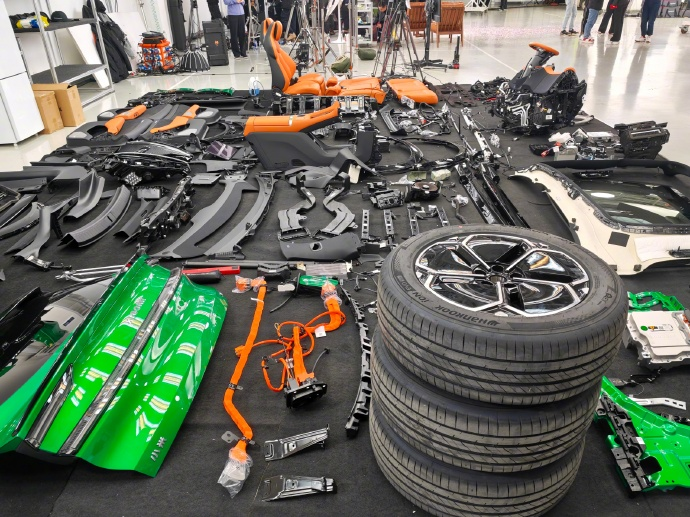
The acceleration of core technology autonomy has led to a breakthrough. Mastering the discourse power in the industry has become the key to breaking through. The self-developed motors and silicon carbide chips disclosed during the live broadcast are the core components. Behind them lies the difficult leap of China's automotive parts industry from "following technology" to "leading innovation". In the era of traditional fuel vehicles, the core technologies of engine and transmission components were long controlled by enterprises from Europe, America, and Japan. Domestic enterprises mostly participated in the industrial chain as "processing and supporting" roles, with meager profits and lacking bargaining power.
However, in the era of intelligent electrification, this pattern is being overturned: Great Wall Automobile spent nearly 10 years in research and development, achieving 90% or more of the self-research and development of components for the 4.0T V8 engine, breaking through the "technical hard nut" of large-displacement engines; Geely's Thunder God Hybrid engine, through independent innovation, has increased the thermal efficiency to the advanced global level of 47.26%, completely摆脱ing dependence on foreign technology; SAIC-GM-Wuling has even achieved 100% domestic chip switching for controllers in the production and installation of controllers, with a cumulative installation of over 3 million sets, breaking the monopoly of foreign companies in the core controller field. This breakthrough in autonomy not only upgrades component enterprises from "secondary roles in the industrial chain" to "technology exporters", but also redefines the profit distribution pattern of the industrial chain - self-research and development of core components can help vehicle enterprises increase their gross profit margin by 8-10 percentage points, injecting core power into the high-quality development of the industry.
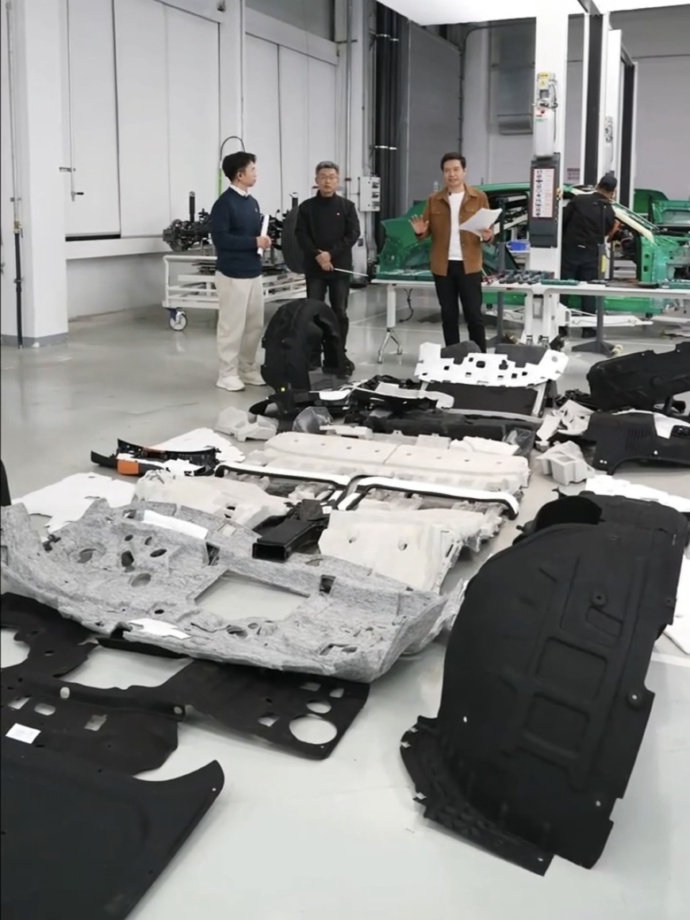
From the perspective of the overall industry development, 2026 will be the "transformational year" for the automotive parts industry. The tightening of safety standards, the acceleration of technological autonomy, and the localization of supply chains - these three trends interweave with each other, driving the industry to shift from scale expansion to high-quality development. And this year's opening-day car dismantling live broadcast is precisely a vivid illustration of this transformation - when the "inner quality" of parts becomes the "outer appearance" of industry competition, the development logic of the entire industry is returning to the essence of technological innovation and quality improvement, providing core support for China's automotive industry to evolve from "large" to "strong".

 32
32