欢迎来到 [东方港湾展览]
, 进入
2027宁波国际汽车零部件及售后市场展览会
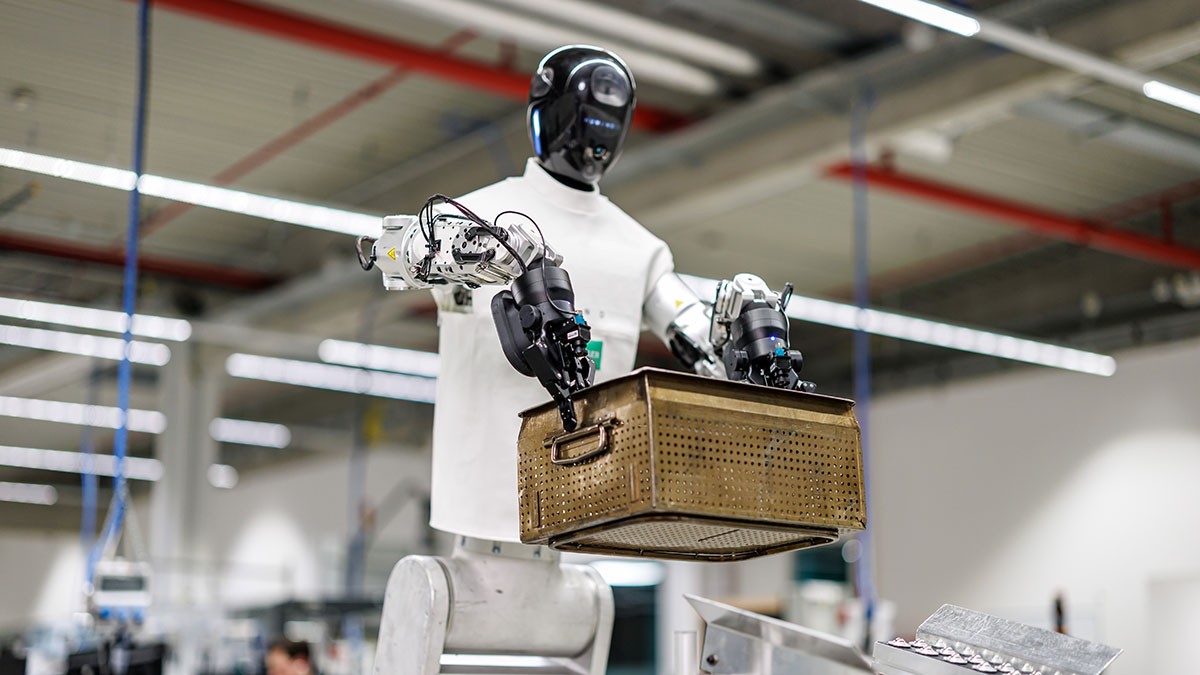
Driven by global automotive electrification and intelligent transformation, traditional auto parts manufacturers leverage decades of experience in mass production, functional safety, reliability engineering and mechatronics to enter the booming humanoid robot track.
Morgan Stanley released a forecast in May, estimating the global humanoid robot market will hit $5 trillion by 2050 with one billion units deployed in factories worldwide. Goldman Sachs also drastically lifted its 2035 market forecast six times in 2024, raising the predicted scale from $6 billion to $38 billion.
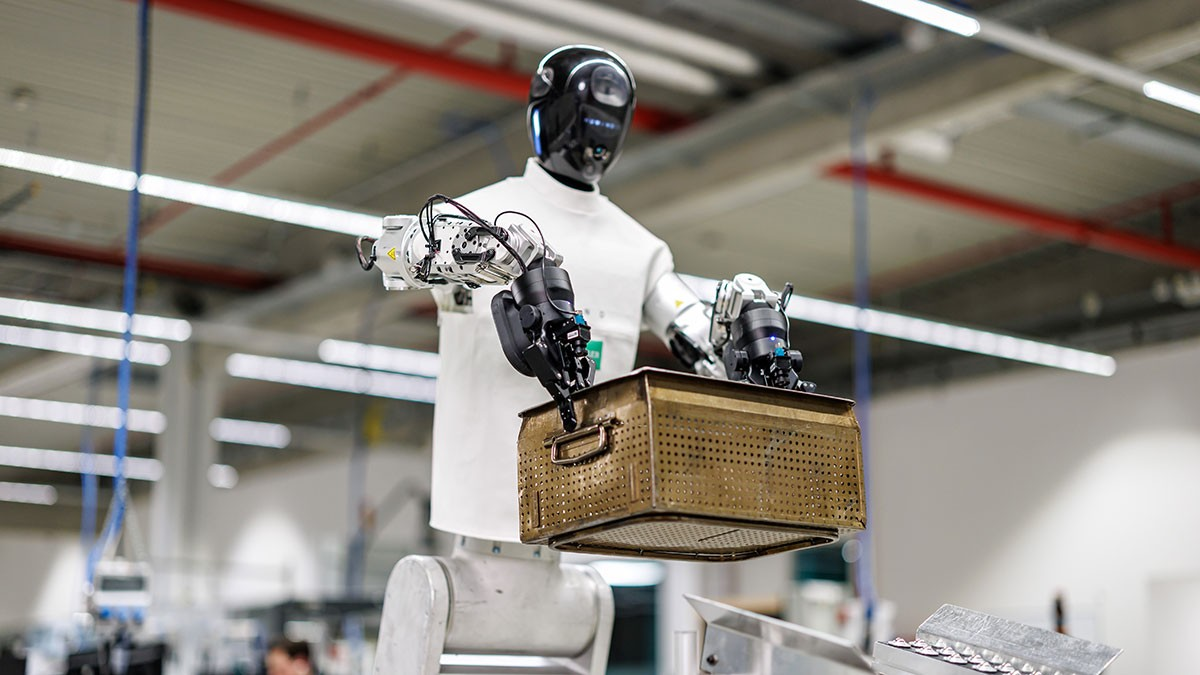
Image source: Schaeffler
Global auto parts giants are speeding up market deployment to seize this huge growth space.
Aumovio, a technology subsidiary spun off from German supplier Continental, plans to manufacture humanoid robots for Israeli startup Mentee Robotics, which was acquired by autonomous driving firm Mobileye for $900 million earlier this year.
Jim Jarrell, CEO of Canadian auto parts enterprise Linamar, disclosed that the company has independently developed collaborative robots and is steadily advancing the full assembly of humanoid robots.
NVIDIA and Samsung are positioning themselves as core chip suppliers for humanoid robots, while Bosch announced cooperation with Neura Robotics in January to supply robot components.
German supplier Schaeffler has deployed the most comprehensive layout in humanoid robots, marking its strategic emphasis on this sector. Schaeffler CEO Klaus Rosenfeld told Reuters in early May that the company’s humanoid robot order volume will reach hundreds of millions of euros by 2030.
Schaeffler partnered with Neura Robotics last November to jointly develop and supply core humanoid robot components including planetary gear actuators for all rotating joints, and plans to deploy thousands of humanoid robots in its own factories by 2035.
The firm sealed a technical strategic cooperation with Swiss Hexagon Robotics this April to jointly develop and mass-produce humanoid actuators. It will install at least 1,000 Hexagon humanoid robots across global plants within seven years to realize production automation and explore large-scale industrial application modes.
Schaeffler also took equity in British startup Humanoid to jointly develop and launch humanoid robot products, gaining priority as its actuator supplier.
It signed a humanoid robot cooperation project with VinDynamics, the robotics subsidiary of Vietnam’s Vingroup, its first such partnership in the Asia-Pacific region. Schaeffler provides planetary gearboxes and actuator technologies for joint product development, testing and performance optimization. The two sides will also collect and analyze robot operation data to iterate hardware and build predictive maintenance systems.
Humanoid robots share highly consistent technical architectures with new energy vehicles. Nguyen Quang Vinh, CTO of VinDynamics, stated that humanoid robots set strict standards for actuator dynamic performance, energy efficiency, precision, volume and weight control. Both new energy vehicles and humanoid robots adopt identical mechatronic systems equipped with motors, power electronics, embedded control units, sensors and vehicle computing platforms.
Manufacturing capacity can be highly transferred between the two industries. As the humanoid robot industry matures, low-cost and stable mass production will become increasingly critical. Automotive suppliers possess mature capabilities in supply chain optimization, quality control, production line automation and cost management, helping them quickly break through technical barriers and accelerate R&D progress. Christian Souche, Global Robotics Innovation Lead at Accenture, added that auto manufacturers’ mature capacity for mass-producing high-precision products perfectly matches robot enterprises’ large-volume procurement demand for core parts such as actuators and motors.
Market opportunities do not equal profitable gains. Pedro Pacheco, Research Vice President at Gartner, said auto suppliers do gain new opportunities from humanoid robots yet struggle to secure substantial profits.
Enterprises can fully reuse their accumulated technologies in metal structural parts, aluminum components, wiring harness integration and mass production for robot manufacturing. Nevertheless, the highest-value segments of humanoid robots including hardware platforms and software systems remain controlled by robot manufacturers.
Component suppliers are easily trapped in the low-margin hardware manufacturing link, forced to compete with low-cost manufacturers worldwide for standardized general parts. Without exclusive core technologies, they cannot build differentiated competitive edges even if they complete the production of robot bodies and mechanical assemblies.
Humanoid robots require far deeper integration of software and hardware than traditional auto parts. Suppliers need to deliver not only physical hardware but also digital twin models and real-time sensor data to support robot enterprises’ algorithm training, simulation debugging and motion optimization. Complex robot movements can only be realized through deep integration of artificial intelligence and hardware actuators.
To deeply cultivate this track, component suppliers must transform from simple hardware producers into integrated service providers of hardware and digital models, offering full support for robot training, simulation and autonomous operation.
Nguyen Quang Vinh mentioned that transforming lab prototypes into mass-producible commercial products requires simultaneous breakthroughs in AI algorithms, hardware development, manufacturing techniques, reliability engineering and safety certification. A feasible development path is to focus on cost-effective application scenarios and prove humanoid robots’ advantages over traditional automation solutions via tangible return on investment.
For auto suppliers eager to enter this track, humanoid robotics is no quick profit shortcut but a long-term competition demanding systematic restructuring of technology, manufacturing and business models. Enterprises that seize the lead in deep integration of hardware and AI will become core players rather than marginal hardware suppliers in this multi-trillion market
Declaration: This article comes from Internet. If copyright issues are involved, please contact us to delete.
 11
10
9
8
7
6
6
6
5
5
11
10
9
8
7
6
6
6
5
5
