欢迎来到 [东方港湾展览]
, 进入
2026宁波国际汽车零部件及售后市场展览会
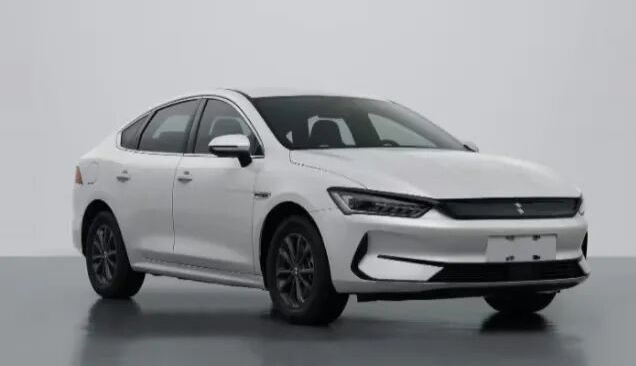
Recently, the Ministry of Industry and Information Technology released the new batch of "Road Motor Vehicle Manufacturing Enterprises and Product Announcement" product listing. Under the brand of BYD, a new automotive brand, Linghui, has been added. In this product listing, the Linghui brand has a total of 4 new vehicles. Among them, 3 are pure electric sedans, including Linghui e5, Linghui e7, and Linghui e9; 1 is a plug-in hybrid MPV, namely Linghui M9.
A reporter from First Finance News learned that the trademark of Lingyun was registered in 2010. According to the plan, the Lingyun brand mainly targets the large-scale procurement needs of the B-end market. This brand integrates the e-series new energy vehicles of the original corporate division of BYD, and has an independent channel system. The purpose of establishing the Lingyun brand is to distinguish the models targeting the B-end market from those targeting the C-end market, aiming to promote BYD's high-end strategy.
In 2025, BYD's total annual sales exceeded 4.6 million units, with a year-on-year growth of 7.73%. Among them, the sales of the Dragon Network and Ocean Network, which target the mainstream market, were approximately 3.4485 million units, while the sales of the high-end brand Tang Dynasty were about 180,000 units. In other words, high-end positioning remains the key focus that BYD needs to overcome.
Coincidentally, last year, GAC Auto's subsidiary GAC Aion also clearly distinguished between the B-end market and the C-end market. In order to improve the existing public perception of Aion as a ride-hailing brand, GAC Aion announced in 2025 that it would launch a dedicated brand for the B-end market. This move is precisely to completely separate the B-end and C-end markets, and to launch different exclusive models for different markets, and the channels and operations for the B-end and C-end will also be separated.
By 2025, the number of domestic car brands will have exceeded 100. Amid intense competition in the automotive market, domestic automakers are witnessing a trend of resource integration, concentrating their efforts on cost reduction and efficiency improvement; at the same time, they are accelerating the process of upgrading to high-end products in order to seize high-profit markets for survival. This includes new emerging car brands such as Yi Jing (co-founded by Dongfeng Group and Huawei) and Qi Jing (co-founded by Guangzhou Automobile Group and Huawei), which all have a high-end positioning.
The latest research report from CITIC Securities points out that one of the main trends in the automotive market in 2026 will be the acceleration of the high-endization of domestic brands. Although there will be abundant supply across various price ranges in 2026, the domestic market competition will still be intense. However, the leading high-end automakers will still be able to achieve relatively high marginal profits.
 10
8
8
7
7
7
5
5
5
4
10
8
8
7
7
7
5
5
5
4
